How did craft coffee reshape the coffee market?
Per-person coffee consumption in the United States fell between 1970 and 1990, and by the mid-2000s Starbucks, which had driven the market through the 1990s, had stalled. We show how craft cafés and large chains kept the market growing by reworking each other's ways of making coffee.
Through the 2000s and 2010s, the coffee market kept expanding after Starbucks, which had driven it in the 1990s, stalled. Tens of thousands of craft firms entered, and US specialty coffee shops went from 1,650 in 1991 to 31,490 in 2015. We traced these changes through interviews, fieldwork at 12 industry and consumer events, and more than 4,000 pages of interview transcripts, podcasts, press articles and industry reports. Craft firms make coffee to bring out its taste, while commercial firms make it for profit through speed and standardization. Either kind can serve connoisseurs or everyone, which gives four kinds of coffee business. All four kept reworking the same ways of making coffee, such as pourover, cold brew and latte art. Firms of the same kind refined them. Firms with the same aim adapted them for wider or narrower groups of customers, and craft and commercial firms remade each other's versions to fit their own aims. None of them set out to change the market, yet together they added products, spread skills and knowledge, and gave coffee a richer vocabulary. We call this process practice expansion: the growth in the number of ways people can make and consume a product as firms with different aims adapt each other's methods.
A coffee business can grow by adapting what other kinds of coffee businesses do to its own aim and customers.
- Craft firms serving connoisseurs: invest in tools and training. Develop equipment that improves taste, as KRUVE did with a sieve that sorts ground coffee by particle size, and train staff to create a recipe for each bean. Espresso Vivace reportedly trains its baristas for months before they serve customers.
- Craft firms serving everyone: automate repetitive steps and adjust the conversation. The PourSteady handles pouring and measuring so that baristas can attend to the grind and to customers. Train staff to simplify for novices and to talk expertly with connoisseurs.
- Commercial firms serving aspiring connoisseurs: borrow craft rituals without requiring expertise. Nespresso boutiques have customers taste two coffees side by side to find what they prefer. Craft firms use the same ritual, cupping, to rank coffees.
- Commercial firms serving everyone: automate and sell simplicity. Bean-to-cup machines at 7-Eleven and Wawa allow a higher price per cup and free staff from brewing. McDonald's set itself apart from craft cafés with ads such as
You don't need a glossary to read our menu
.
Coffee kept growing after its leading firm stalled
In 1970, Americans drank about 35 gallons of coffee per person a year. By 1990, they drank about 25. The industry had consolidated. Kraft General Foods (Maxwell House) and Procter & Gamble (Folgers) held a combined 65% of the market, most people drank drip or instant coffee, and large advertising campaigns did not stop the decline. People in the industry call this period the first wave. In the 1990s, Starbucks adapted the Italian coffee experience to North American tastes and drove the second wave, growing from 84 coffee shops in 1991 to 425 in 1994 and 8,836 in 2006. By the mid-2000s, however, its sales had declined and its share price had fallen by more than half.
We would expect a consolidated market whose leading firm has stalled to slow down, with less investment in new products, fewer new firms and less interest from consumers. The coffee market kept expanding through the 2000s, 2010s and 2020s, in what the industry calls the third wave. Specialty coffee shops in the United States grew from 1,650 in 1991 to 31,490 in 2015. By then, specialty coffee made up more than half of the $48 billion US retail market.
The third wave came with the entry of tens of thousands of craft firms. Craft cafés and roasters treat coffee as something to perfect, and their aims clash with those of chains that sell coffee for volume and margin. Research had treated this kind of clash as a problem that each firm must manage. Whether it could also make a market grow was an open question.
The usual explanations of how markets change each cover part of this story. One credits a leading firm, or a group of firms with a shared plan, as Starbucks was in the 1990s. In the third wave, however, the market changed without any firm setting out to change it. A second expects small specialists to fill niches at the edges of a consolidated market, apart from the large firms, and treats craft firms as small specialists. A third looks for a new technology or product design. In the third wave, much of the change lay in how firms and customers made coffee, what they knew about it and what it meant to them.
What we studied
We traced the coffee market's changes since the early 2000s. We interviewed 14 farmers, roasters, baristas and café owners, for between 40 minutes and four hours each, about how they make coffee and how they see the market and their competitors. We attended 12 industry and consumer events, such as barista competitions and cuppings (the formal tastings the trade uses to compare coffees), where we took field notes, photographs and videos. We also gathered published interviews with 42 people in the trade, 20 podcast episodes, general press articles from 2000 to 2020, articles from specialty outlets such as Barista Magazine and Sprudge, and 1,126 pages of reports from trade associations and market research firms. As our analysis took shape, we collected more material on particular firms and methods, such as coffee pods and pourover. The material covers three periods, shown in Figure 1, and our analysis concentrates on the third, when craft firms grew alongside the chains.
Making coffee is a routine that people learn and share. Each way of doing it combines equipment and ingredients, skills, and meanings, such as a cheap coffee to wake up or a coffee to savour. A Dunkin' employee serving the morning crowd and a barista preparing a pourover for an enthusiast both make coffee, with different equipment, different skills and different meanings. We follow how firms changed these ways of making coffee, starting with who the firms are.
Four kinds of coffee business
Who sells coffeeCraft firms make coffee for its taste
Craft cafés and roasters aim to bring out each coffee's flavour, which takes skill. Their staff train, often with the Specialty Coffee Association, which trains more than 50,000 people a year, and they choose a brewing method to suit a bean's origin and variety. Some craft firms serve connoisseurs: a café owner we interviewed wanted a great coffee that moved him personally, even if some customers disliked it. Others serve everyone. The owner of Coffee Friends (a pseudonym), where we did fieldwork, offers space, Wi-Fi, a conference room and plugs everywhere so that anyone can work or study there. She also trained as a barista and relied on a local micro-roaster to choose her grinder, espresso machine and recipes.
The idea is not to please everybody.Café owner, interview
Commercial firms make coffee for speed and margin
Commercial firms standardize coffee-making to make it fast, consistent and cheap. Machines replace skill: McDonald's uses two-step brewing machines and Tim Hortons a one-button machine, so staff can learn the job in a few hours. Some commercial firms serve everyone. McCafé, with $4 billion in annual US sales, planned a $1 drip coffee and a $2 small specialty drink to compete with Starbucks on price. Other commercial firms serve a narrower group. Starbucks Reserve Bars rotate beans and offer several brewing methods for people who want to seem discerning
about coffee, without relying on the expert baristas that craft cafés employ.
Rivals of the same kind refine how coffee is made
How the ways of making coffee grew, part oneBarista competitions push craft techniques forward
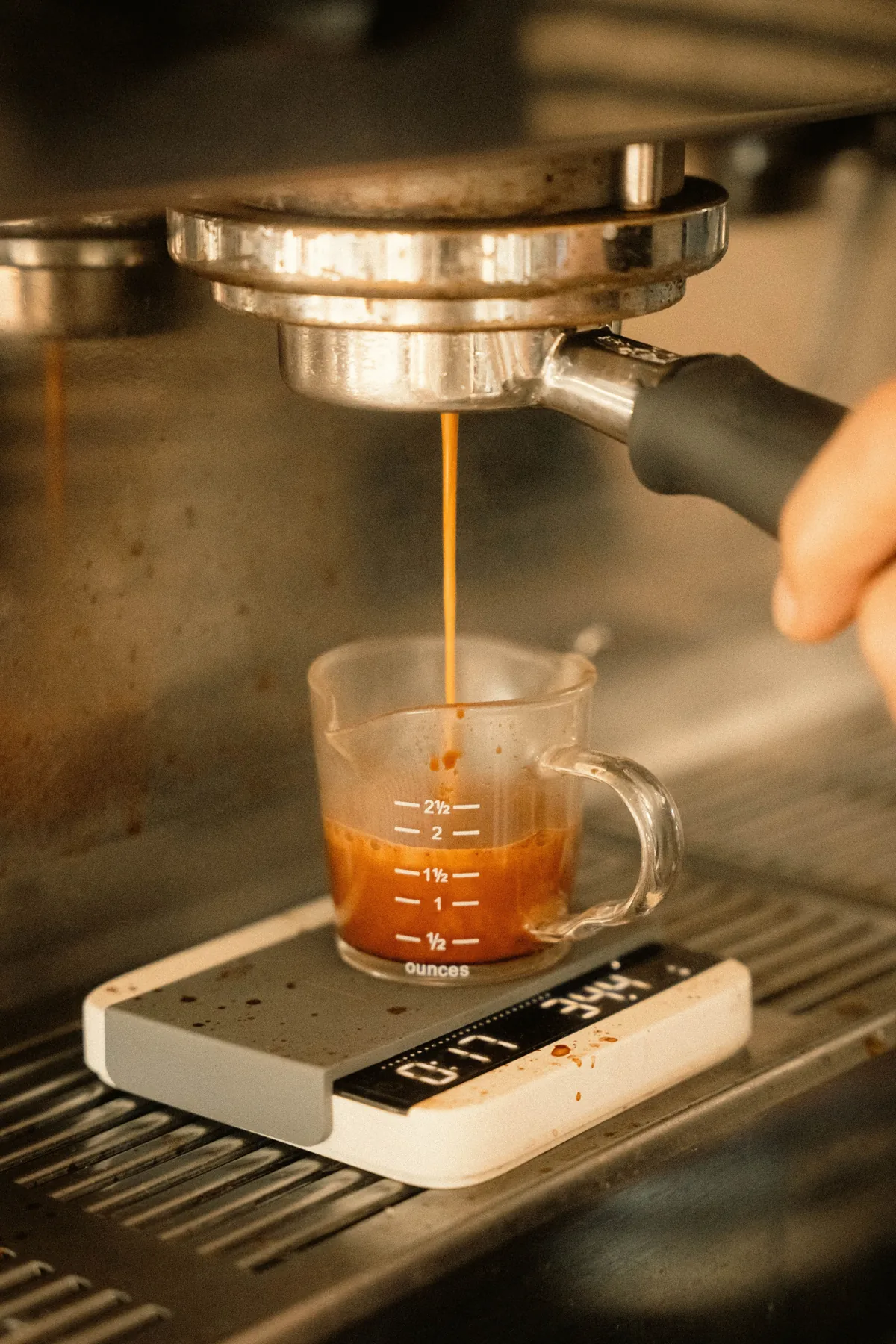
At the World Barista Championship, baristas from more than 60 countries each serve 12 drinks to five judges in a 15-minute routine. Contestants qualify through regional and national rounds, so hundreds of routines a year try to outdo earlier ones. Jooyeon Jeon won in 2019 with a signature drink that restored sugars lost in roasting, using malt, starch and a blackberry reduction. Earlier competitors introduced single-origin beans, the Mahlkönig EK43 grinder and carbonically macerated beans, and craft firms serving connoisseurs now treat single-origin beans and the EK43 as standard. The World AeroPress Championship did the same for AeroPress recipes, which competitors changed through new water temperatures and filtering methods.
Chains refine their own drinks
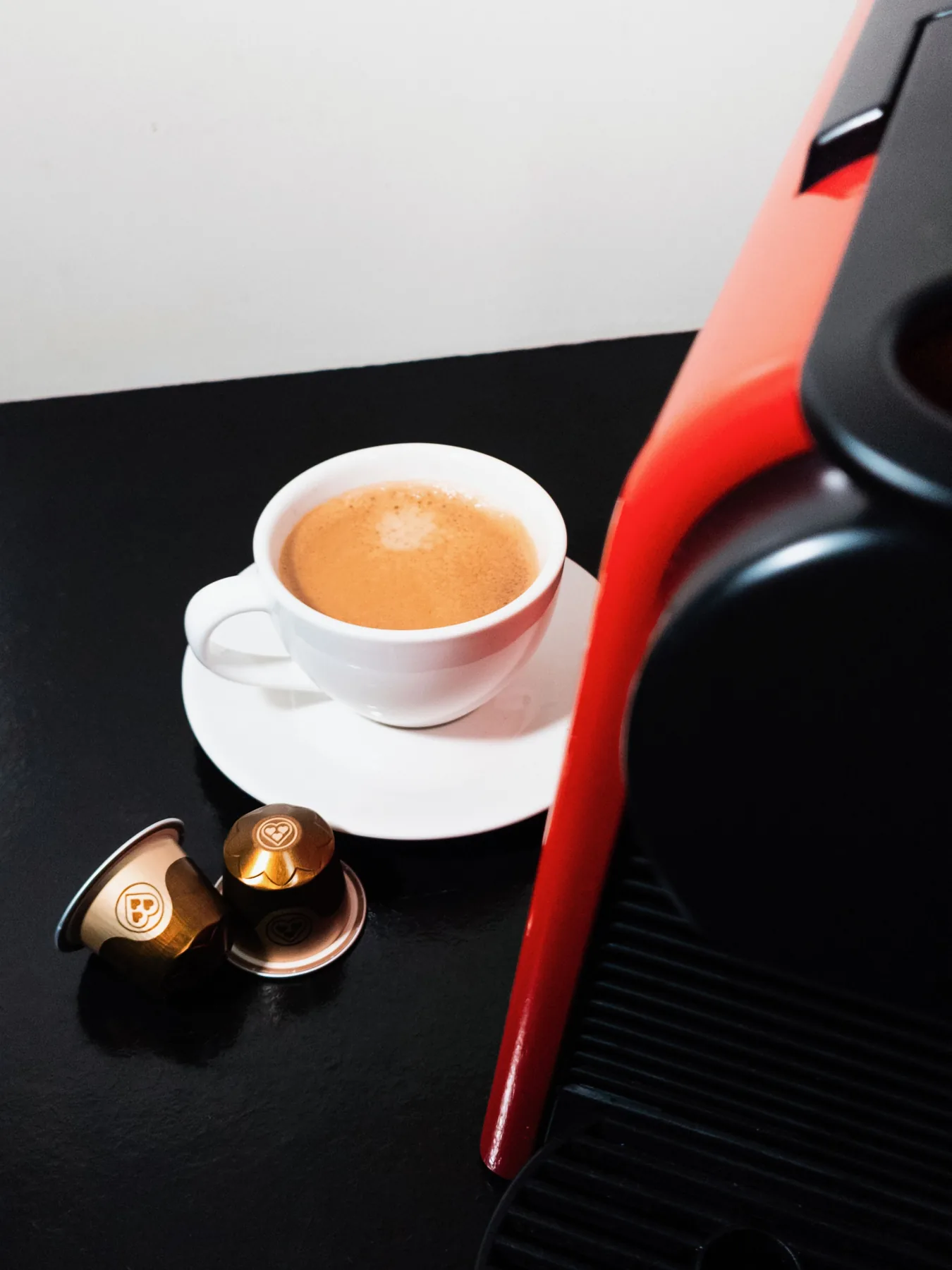
Commercial firms refine their methods with their own aim in view, as craft firms do at competitions. Starbucks added syrups to its lattes to create flavoured drinks such as the Unicorn Frappuccino and the Sugar Cookie Oat Frappuccino. Pod makers built capsules and single-serve machines, which brought new know-how, such as how to brew pod coffee, and a new meaning for making coffee: pushing a button for convenience. Each refinement gave customers another drink or another way to make one.
Why firms had to adapt each other's methods
A refinement made by one kind of firm often did not suit another kind, which served different customers or pursued a different aim. Cold brew made for broad tastes disappointed connoisseurs, and handcrafted espresso drinks clashed with the chains' need for speed. To use what other firms had developed, firms had to adapt it, and each adaptation added another way of making coffee. Firms with the same aim adapted methods for wider or narrower groups of customers, and craft and commercial firms remade each other's methods to fit their own aims.
Firms with the same aim adapt methods for wider or narrower customers
How the ways of making coffee grew, part twoCraft roasters for connoisseurs rework cold brew
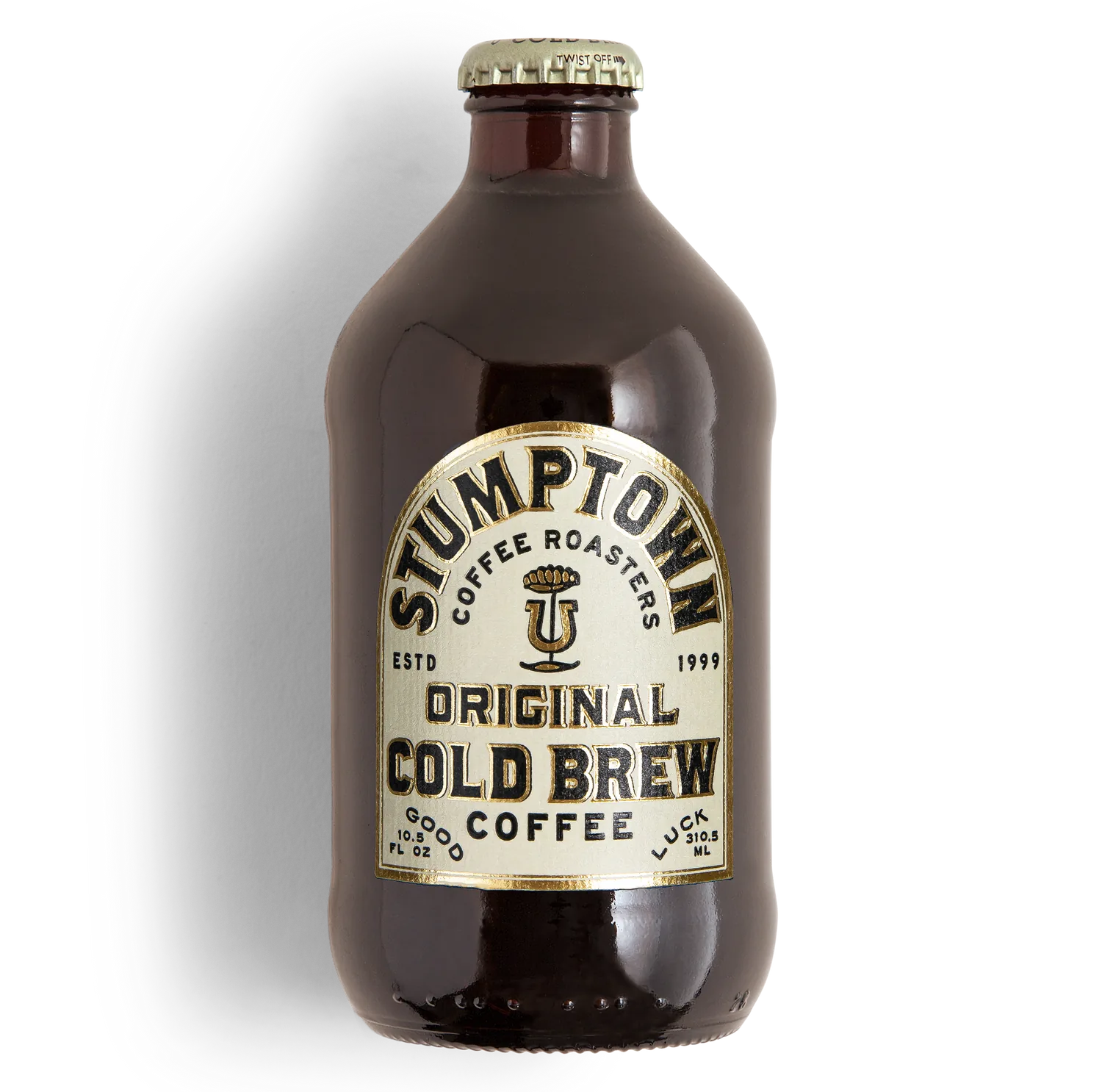
Stumptown, a craft firm that served a broad market after a 2011 investment, was one of the first to sell ready-to-drink cold brew, steeped without heat for over 12 hours and low in acidity. Low acidity suited a wide range of customers, and such cold brews said little about where the coffee came from. Connoisseurs objected because complex acidity is what makes the best coffees valuable. The New York Times summarized their view: Brightness is a virtue.
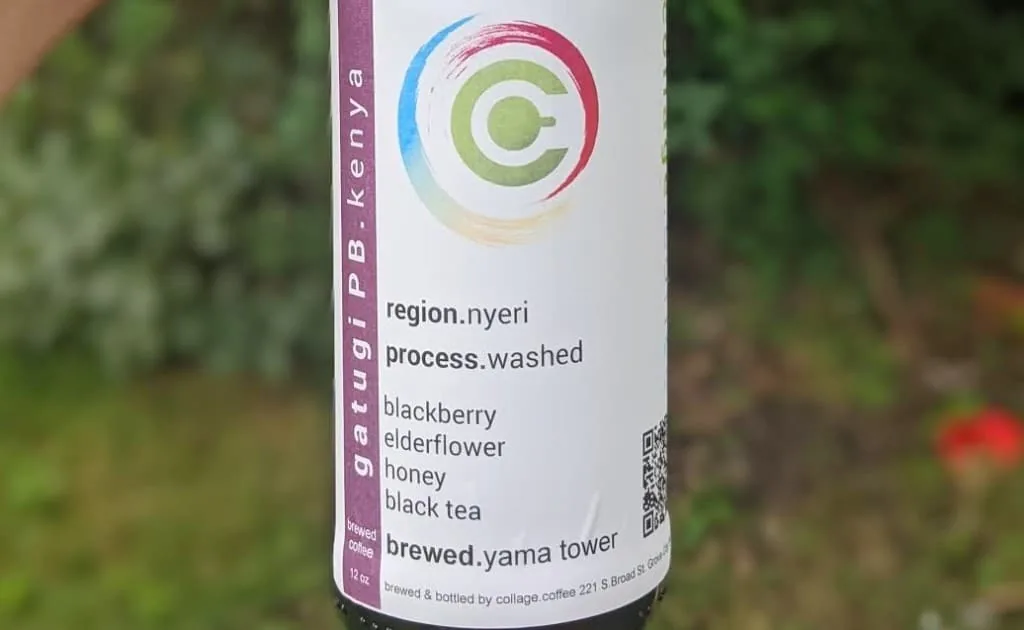
So craft firms serving connoisseurs reworked cold brew. Klatch cold-brewed a single-origin Ethiopian with the BrewBomb drip method to bring out its acidic flavours, and Collage Coffee printed the producer, region and tasting notes on its cold brew.
Craft cafés for everyone standardize the pourover
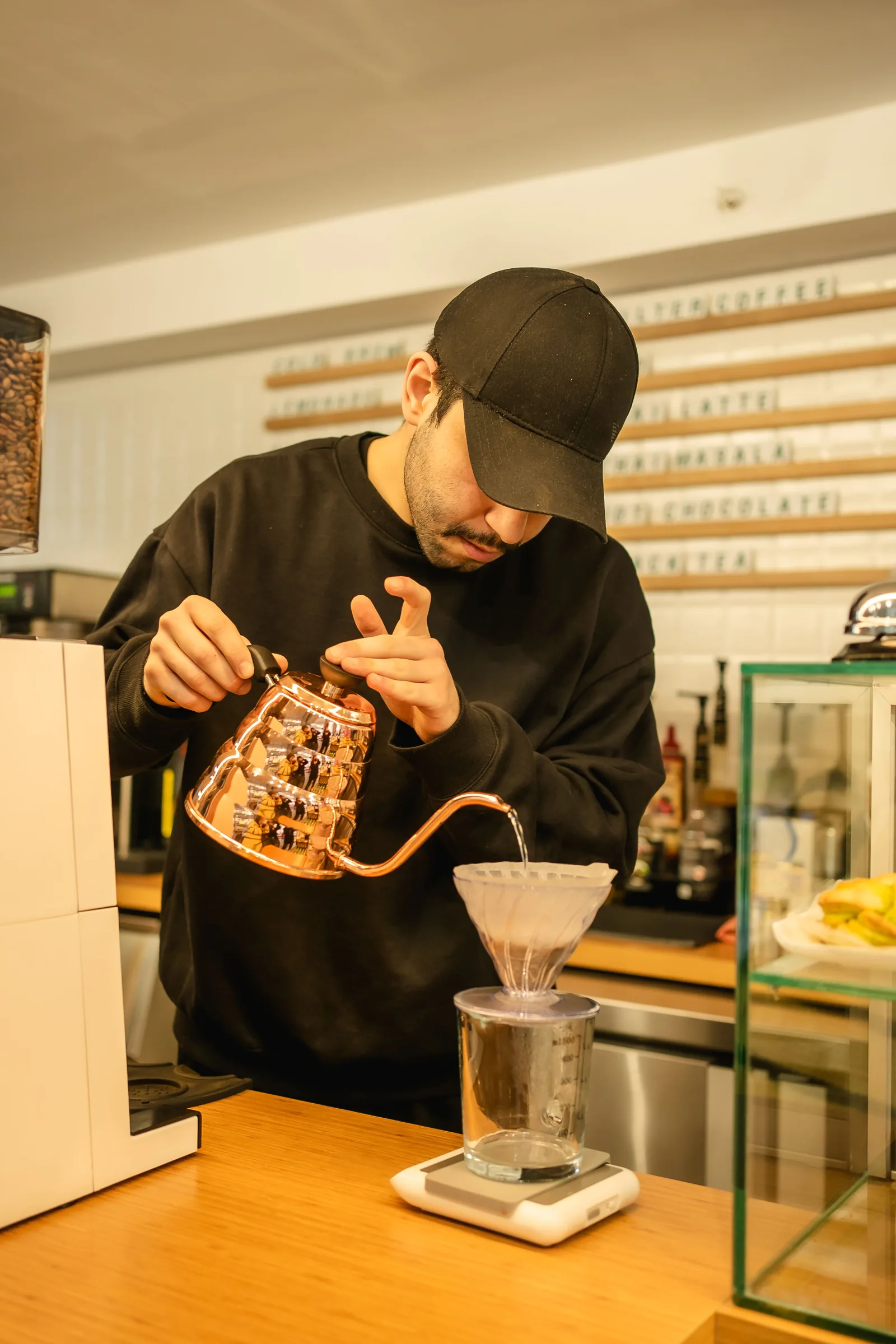
Craft roasters tailor a pourover recipe to each bean. One roaster sent us this recipe for its Red Bourbon: 20 grams of coffee to 320 millilitres of water, in four pours of 50, 100, 100 and 70 grams, over about three minutes and ten seconds. Craft cafés serving everyone simplified this into one standard recipe that gives most of the taste benefits for any coffee. It uses about 15 grams of coffee and five pours of 50 grams within three minutes, a ratio of about 1 to 17 by weight. Some dropped the scale. The simpler routine also made pourover seem less elitist.
all about control.The Atlantic, Pilsch 2016
Craft cafés for everyone pour simpler latte art
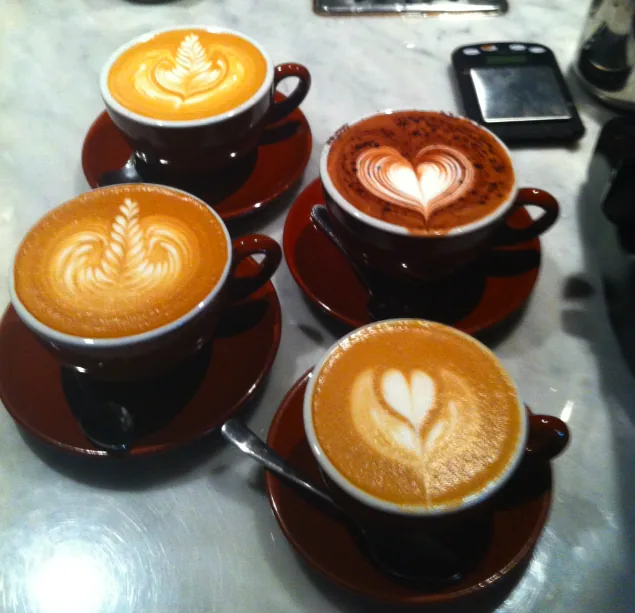
Craft cafés serving connoisseurs free-pour difficult patterns such as a swan. Lee Kang-Bin's C. Through Café builds its brand on latte art, and its etched version of Van Gogh's The Starry Night can take ten minutes. Craft cafés serving everyone keep to simpler patterns, such as a heart or a tulip, which lets them serve many customers and give more time to service while still offering latte art. Through these adjustments, the skill spread across craft cafés.
We don't just appreciate it; we expect it.Perfect Daily Grind 2016

Craft and commercial firms remake each other's methods
How the ways of making coffee grew, part threeCraft cafés remake the Pumpkin Spice Latte
Starbucks baristas make the Pumpkin Spice Latte from a standard recipe that combines spices, syrups, coffee and milk. Craft cafés in Baltimore, Durham, Portland and elsewhere make their own versions. A craft café owner we interviewed makes the pumpkin spice in-house each fall, from real pumpkin and spices developed to match the café's micro-roasted house blend. The drink takes much longer to make and calls for new skills, and it turned a chain's seasonal drink into one that customers regard as craft.
I burned myself I don't know how many times, but people love it.Craft café owner, interview

Chains automate the handcrafted drink
Craft firms taught customers to expect better coffee, and customers came to want coffee-shop drinks such as handcrafted espresso. Chains answered with machines. Cracker Barrel, McDonald's and Tim Hortons developed proprietary machines that replace a barista's skill with a button, so they can employ minimally skilled, low-paid workers as baristas. Chains also use cheaper coffee. The median price that surveyed craft firms paid for green coffee from 2016 to 2018 was $3.00 a pound, while Starbucks reported paying $1.72 in 2014. Starbucks and craft cafés charge similar prices for lattes, so automation and cheaper beans let Starbucks meet customers' new expectations while keeping high margins.
handcrafted.Second Cup 2019
Starbucks turns pourover into a quick single cup
By 2010, Starbucks offered pourover as a way for baristas to serve a fresh cup of decaf or bold coffee when no pot was brewing. It used one recipe for every bean, removed the scales and timers, and had baristas pour all the water in a single spiral. A Starbucks assistant store manager described stores that grind the day's coffee in the morning. This version brought pourover to customers without expertise, for whom craft work might have seemed out of reach. Ratio Eight and Bodum sold machines that automate pourover at home for people who wanted to brew it without developing craft expertise.
the efficiency of making a quick single cup of coffee.The Seattle Times, Allison 2010
What the market gained
These changes added products. Swan-neck kettles, whose narrow spout delivers a thin, precise stream, were hard to find in the late 2000s. Williams-Sonoma began carrying Hario's brewing equipment in 2010, and today hundreds of models sell at different prices. Commercial firms added pods, flavoured lattes and automated pourover machines.
Skills and knowledge spread as well. Craft firms developed recipes for particular beans and roasts and documented pourover in thousands of articles, blog posts, courses and books. Latte art, which appeared in the United States with the heart and the rosetta in the 1980s and 1990s, became expected in craft cafés, and some commercial coffee shops etch designs in chocolate powder through stencils. Recipes tailored to particular beans also brought out the flavours of farming regions, coffee varieties and processing methods, which supported premium prices: a 340-gram bag of craft coffee averages $15 and can cost more than $100.
Coffee also gained a richer vocabulary. In press coverage from 1990 to 2020, words such as craft, handcrafted, artisanal, connoisseur, coffee snob and complex coffee appeared and spread as craft firms grew. Baristas came to be seen as skilled professionals, and also as gatekeepers, a reputation that Portlandia mocked in "The Coffee Manifesto". Craft cafés serving everyone softened that image: one owner we interviewed trained her baristas to serve everybody and drew on the TV show Friends to make her café welcoming. Chains borrowed the word handcrafted. Figure 2 brings the firms' moves and their results together.
Chains kept high margins on expectations that craft firms built
Chains benefited from work that craft firms did. Craft firms raised what customers expected from coffee, and chains met those expectations with machines and cheaper beans while charging similar prices for lattes. The machines let chains hire minimally skilled, low-paid workers as baristas and leave those workers little room to engage with the coffee. At Starbucks, latte art depends on employees working against wide pitcher spouts, 2% milk and little crema.
Craft firms bore other costs. Connoisseurs criticized cold brew from craft firms serving everyone for flattening coffee's taste, and craft cafés serving everyone had to work against the reputation for snobbery that came with baristas' professionalization. When chains co-opt a word such as handcrafted, they can also devalue it or turn a group of consumers into a caricature. We did not study these costs directly, and which firms lose as a market grows this way remains an open question.
Where else this happens
Craft and commercial aims coexist in many markets, including barbering, beer, butchering, chocolate, cocktails, cuisine, denim, fashion, motorcycles and tattoos. In beer, craft brewers treat brewing as artistic expression, while commercial brewers aim for consistent, large-scale, profitable production. Our online appendix documents the four kinds of firms in other markets. We propose that the process should occur wherever firms with competing aims operate side by side over time. Each kind of firm will refine and adapt the others' methods to fit its own aim and customers, and the market will gain products, skills and vocabulary.
The process requires both aims to persist, so that neither replaces the other, and our account covers aims that compete. Whether aims that complement each other produce a similar expansion is an open question. Our data also suggest a path for customers. Most people seem to enter the coffee market through commercial firms serving everyone and, as their expertise grows, move to commercial firms for aspiring connoisseurs or craft firms serving everyone, and sometimes to craft firms serving connoisseurs. If further research confirms this path, it would show firms how to deepen customers' involvement and move them toward premium offerings.
Pierre-Yann Dolbec, Zeynep Arsel, and Aya Aboelenien (2022). A Practice Perspective on Market Evolution: How Craft and Commercial Coffee Firms Expand Practices and Develop Markets. Journal of Marketing, 86(6), 50–69. Figures: CC BY 4.0, Pierre-Yann Dolbec.
Read the paper